Posts for: #Surveillance

// welcome to taz

In the age of surveillance capitalism, your data is either a revenue stream for big tech or a liability waiting to expose you. Either way, leaving it to chance is just a matter of time before you pay the price.

Privacy is Power. But Power requires Knowledge.

This is where I write about taking back control, not through paranoia, but through understanding. The philosophy behind why it matters. The tools that actually work. The honest conversation most people are too comfortable to have.

No silver bullets. No fear-mongering. No agenda beyond the truth as clearly as I can see it.

No ads. No analytics. No trackers. Static files served from hardware I control.

If you’re here, something brought you. Welcome to the TAZ.
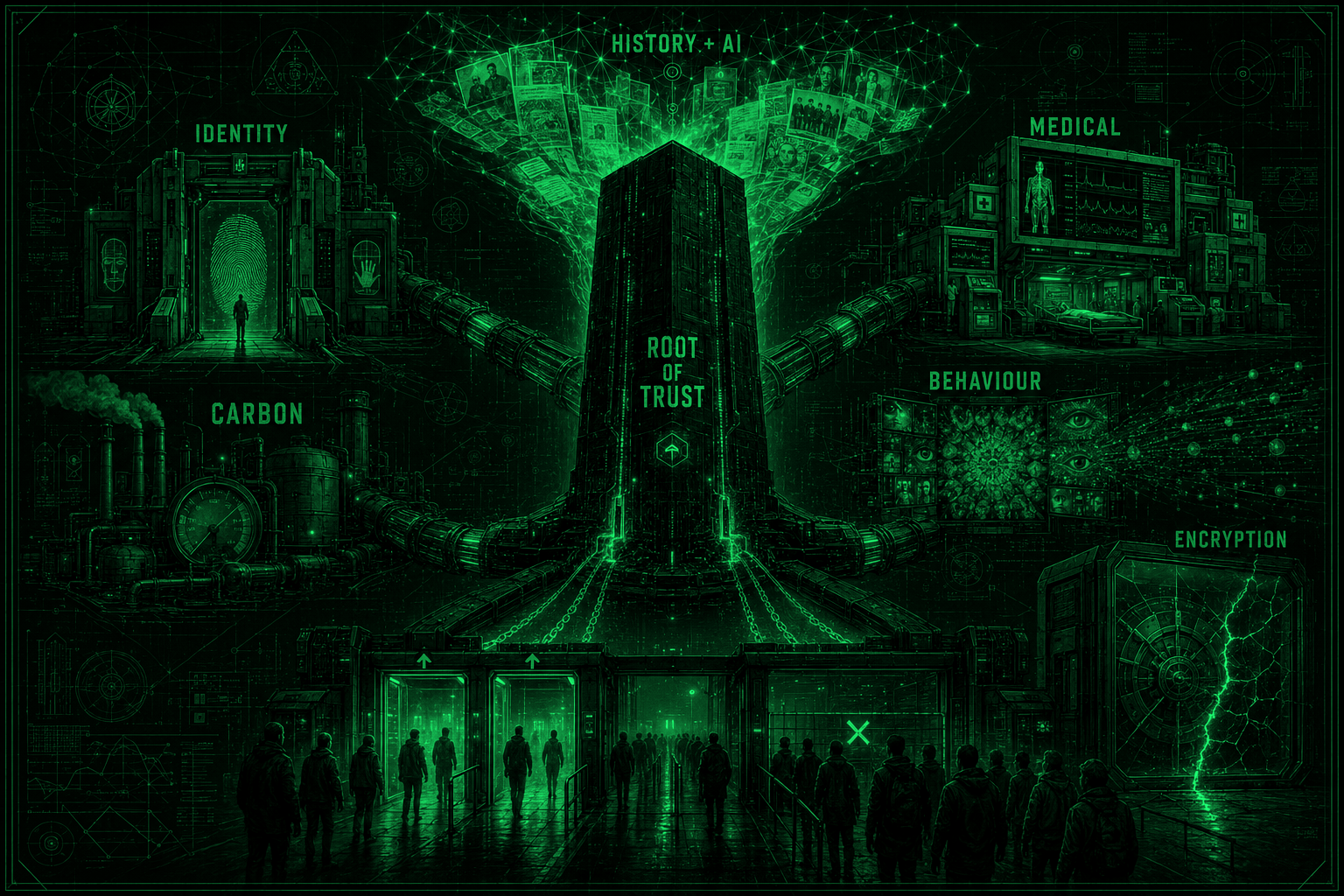
// digital id: decoded

The root of trust architecture behind digital id, medical, carbon, and behavioural data layers

A quick note before we start. A few people close to me, family, friends, some from different corners of my life, have reached out lately asking about all this. Digital id, age verification, what’s actually happening, some fully unaware, some knowing snippets from a headline. So this one’s written differently to most of what’s on TAZ. Less essay, more me walking you through something I’ve spent a lot of time untangling, for anyone who’s been asking. Still thorough, still honest about what’s uncertain, just less philosophical scaffolding. If that’s not your thing today, the usual TAZ voice will be back next time.

[keep reading]

// the criminal argument

“Very effective for online criminals too.”

That was the comment. Posted under a privacy stack, the kind of post that lists Signal instead of WhatsApp, GrapheneOS instead of stock Android, Proton instead of Gmail. Eight words, no elaboration needed, because the eight words weren’t really an argument. They were a verdict, delivered the way verdicts usually are online, confidently, finally, with nothing underneath it.

It deserves a real answer anyway, because it is one of the oldest objections in the privacy debate, the kind that gets the fact right every time and the conclusion wrong every time.

[keep reading]

// life on subscription

The subscription model didn’t just change how we pay. It changed who owns what runs on your machine.


the era that ended quietly

I remember buying StarCraft. Box in hand, disc inside, mine. No account, no connection required, no recurring charge. I installed it, played it. It’s on the shelf behind me still. Survived decades, three house moves, and an industry that decided ownership was an inconvenient business model.

I bought it once. It asked nothing more of me.

[keep reading]

// my projects | whoami.zerotrust.nz

This is part of an ongoing series of notes on tools I build for my own infrastructure. Not polished products. Working software.


how it started

It started as a what-is-my-ip page.

That is how these things start. You want something simple, you build it in an afternoon, and then you start pulling on the thread. Every pull reveals something you did not know you were missing. The afternoon becomes a week. The what-is-my-ip becomes something else entirely.

[keep reading]

// the spy in your life

You reach for it before you reach for the day.

Eyes still shut, the hand already knows the way. Warm from the charger, face down beside the pillow, the first thing you touch in the morning and the last thing you let go of at night. Not the window. Not the person next to you. The glass.

Nobody made you do this. There was no order, no mandate, no one at the door. You queued for it. You paid for it. You upgraded it the moment a better one arrived. The most complete record of a human life ever assembled, and we carry it willingly, charge it nightly, and feel naked the moment we leave it in the other room.

[keep reading]

// the state of surveillance: the death of the unseen self

We are about to lose the last sanctuary of what makes us human.

We are not made of flesh and blood anymore. We are made of data.

Every scroll, every like, every pause while reading, every face we show to a camera, every word we type when we think no one is watching. It all becomes fuel. Fuel for algorithms that no longer need our permission to know us better than we know ourselves.

[keep reading]

// the wake up call

The internet was never what they told you it was.

Not a garage project. Not a hippie dream about connecting the world. Not a neutral platform that somehow, regrettably, got out of hand. That’s the fairy tale. It was always a fairy tale.

Yasha Levine’s Surveillance Valley documents what actually happened. The internet was built by the Pentagon. ARPA’s original vision wasn’t communication or collaboration. It was counterinsurgency. A system to track guerrillas, monitor dissidents, and manage populations during the Vietnam War era. Surveillance wasn’t a bug that crept in later. It was the architecture from day one.

[keep reading]

// the mirror

This is part two of an ongoing series. If you’re starting here, Why Privacy Matters is part one.


The surveillance apparatus is invisible because it was engineered to feel like you.

Not like a cage. Not like a camera. Like a mirror. Like a friend who remembers everything. Like a feed that somehow always knows what you need, right now, at this exact moment, in this exact mood.

That’s not coincidence. That’s engineering.

[keep reading]

// why privacy matters

Privacy is like the immune system of freedom. We never truly understand its value until it’s gone, until the consequences of its absence become undeniable. By then, it’s often too late. The damage has metastasized into the very foundations of how we live, think, and relate to one another.

But privacy isn’t usually lost through force. It’s given away, willingly, in exchange for convenience. And that’s what makes the real danger so difficult to see.

[keep reading]